The Winery
Anton Bauer on the Wagram
With passion
and character
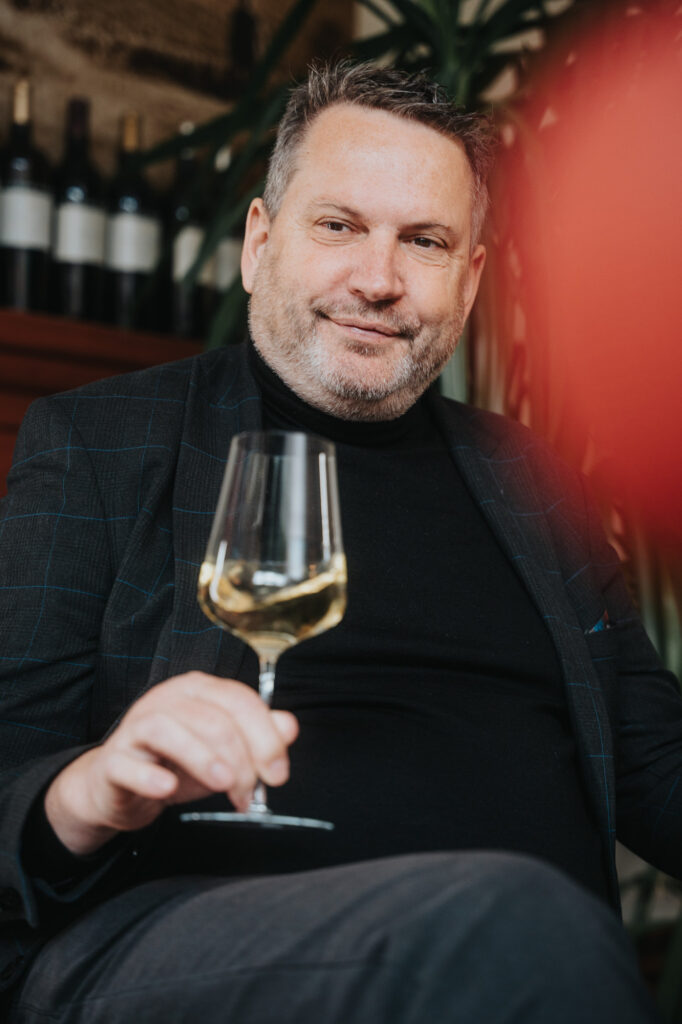
Anton Bauer (1971–2026) led the winery in its fourth generation with passion, consistency, and a keen sense of quality. After his education at the Krems viticulture school and formative experiences in Burgundy, he returned to his homeland to take over his parents’ winery – small at the time, but full of potential.
With foresight, artisanal precision, and a deep connection to the region, he began to shape a unique style step by step.
Full of courage, curiosity & consistency
With a clear vision and tireless commitment, he developed the winery further and left behind an unmistakable signature. Hand-harvesting, careful work in the vineyard, and a conscious approach to time became the pillars of his work.
His wines stand for origin, precision, and character – driven by respect for nature and the courage to follow one’s own path.

What remains is a winery that carries his attitude forward...
…and wines that make his passion, his calm, and his conviction felt in every vintage.
Nature & surroundings
Origin you can taste
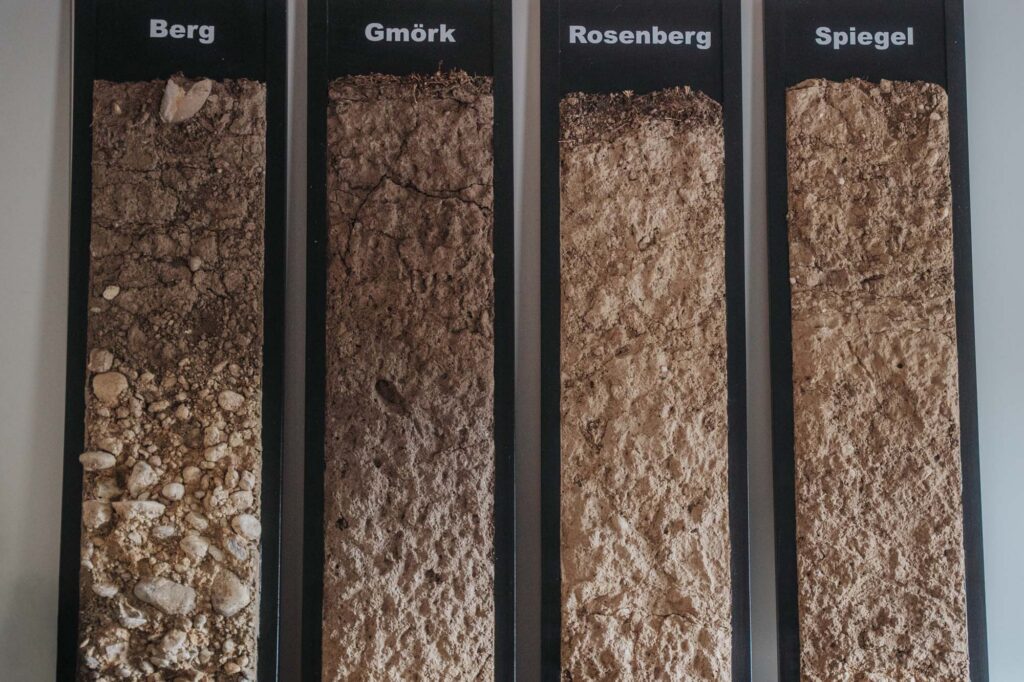
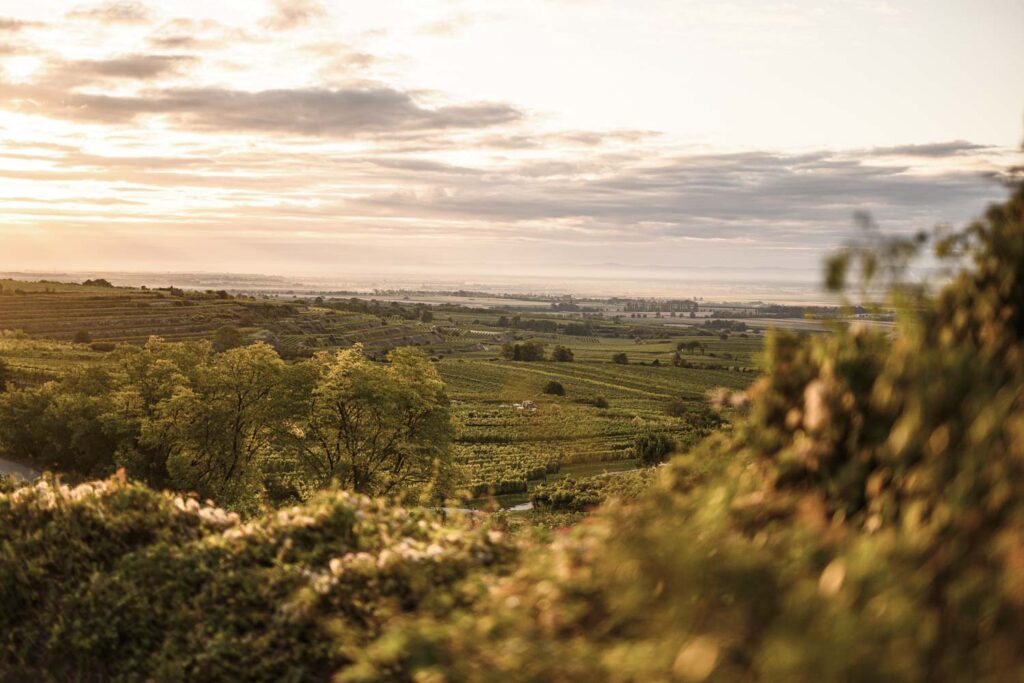
On the Wagram, wines are created from a special combination of soil and climate. Deep layers of clay and loess, permeated by old sediments of the ancient Danube, allow the vines to root deeply. This way, they access water reserves and minerals from the depths – the foundation for structure, density, and expression. At the same time, fossil deposits and fine soil layers shape the characteristic minerality that gives Anton Bauer wines their calm, elegant depth.
Did you know?
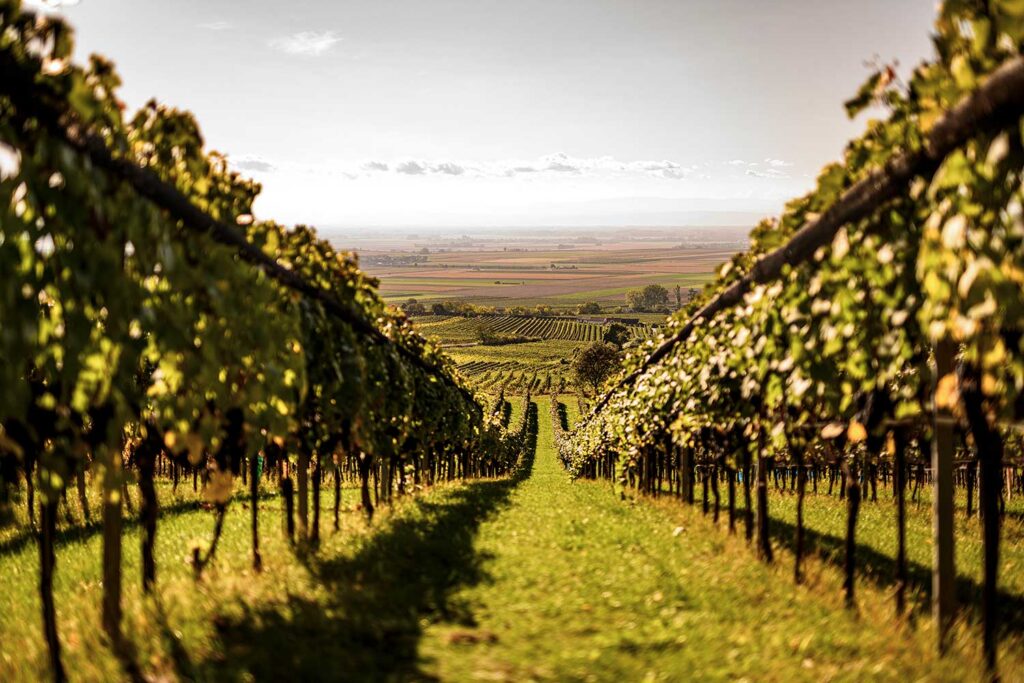
The west-east extension of the Wagram means that the vineyards all face south, allowing them to stretch toward the sun.
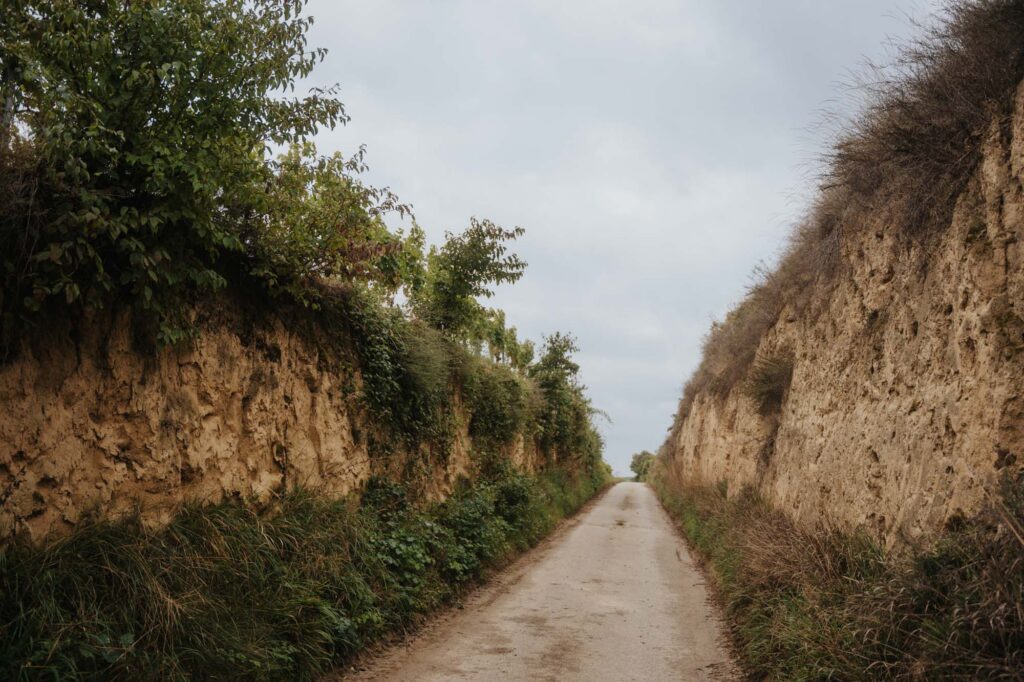
The Wagram
Viticulture in Lower Austria
The south-facing vineyards benefit from intense sunlight, while the interplay of Pannonian warmth and cool air from the Waldviertel ensures balance. Warm days promote the ripening of the grapes, while cool nights preserve freshness and aromatics. This interplay gives the wines tension, finesse, and a lively play of fruit and acidity – an expression of the natural balance that makes the Wagram so unique.
Our Vineyards
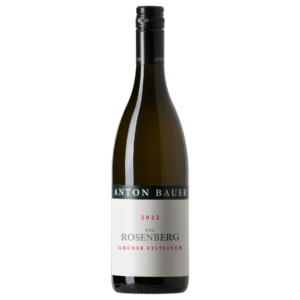
The name can be traced back to the wild roses that grew here particularly abundantly. The Rosenberg vineyard is considered one of our best and most important sites; it is located on one of the highest vineyards on the Wagram, directly below the summit of the Hengstberg (371 m). To the north, a forest directly borders the vineyard, which on the one hand protects against strong winds from the northwest and on the other hand ensures a special microclimate: despite the exposed southern location, a cool wind blows from the forest, causing greater temperature fluctuations between day and night even in hot summers, more than in other locations. This intensifies the formation of aromas in the berries; the wines are complex and structured. Grüner Veltliner and Cabernet Sauvignon are planted here on deep loess with clay content.
The Spiegel site marks the border to the Kamptal and, like the Rosenberg, is one of the highest points on the Wagram. Protected to the northwest by the ridge of the Hengstberg, the gently terraced site at about 350 meters above sea level faces south and features a high proportion of Danube gravel and weathered Gföhl gneiss in the soil, in addition to clay and loess. Aside from the different soils, Spiegel is not a basin site but a long-stretched high plateau with a cooler, airy microclimate. Grüner Veltliner and Blaufränkisch turn out very mineral, delicate, and elegant here. They have higher acidity and are particularly long-lived, not least for that reason.
The Kirchthal vineyard lies north of Feuersbrunn and reaches an altitude between about 300 and 370 meters up to the edge of the forest on the Hengstberg ridge. The vineyards primarily face south and southeast. The subsoil consists of clays and fossil-bearing sands that were deposited in the former sea about 19 million years ago. Over large parts, these deposits are covered by calcareous and silty-mealy loess. In the highest part of the vineyard, the vines stand on the rather lime-poor sandy gravels of the former course of the ancient Danube. At that time, about 8-10 million years ago, it flowed much further north than today’s Danube toward the Vienna Basin. The vineyards are registered under the name Kirchthal in both the Franciscan Cadastre (1817-1824) and the Administrative Map (1864-1881). Allegedly, the sound of the church bell could be heard particularly well here in a shallow hollow.

The sites of Ried Brenner are open to the south on the middle slope toward the Hengstberg ridge, located in the area between about 230 and 290 meters above sea level. The vineyards, which are only slightly terraced, are primarily south-facing. The soil is a calcareous chernozem made of loess. Loess is calcareous rock dust (silt) that was blown here from the Alpine region with the bare forelands of the glaciers and river plains during the vegetation-poor cold phases of the Ice Age and now forms a loamy-sandy, always calcareous, and well-storing soil with a balanced chemical and mineralogical composition. Vineyards were already registered here in both the Franciscan Cadastre (1823) and the Administrative Map (1864-1881), which also bore the name Brenner at that time. The name suggests former slash-and-burn clearing.
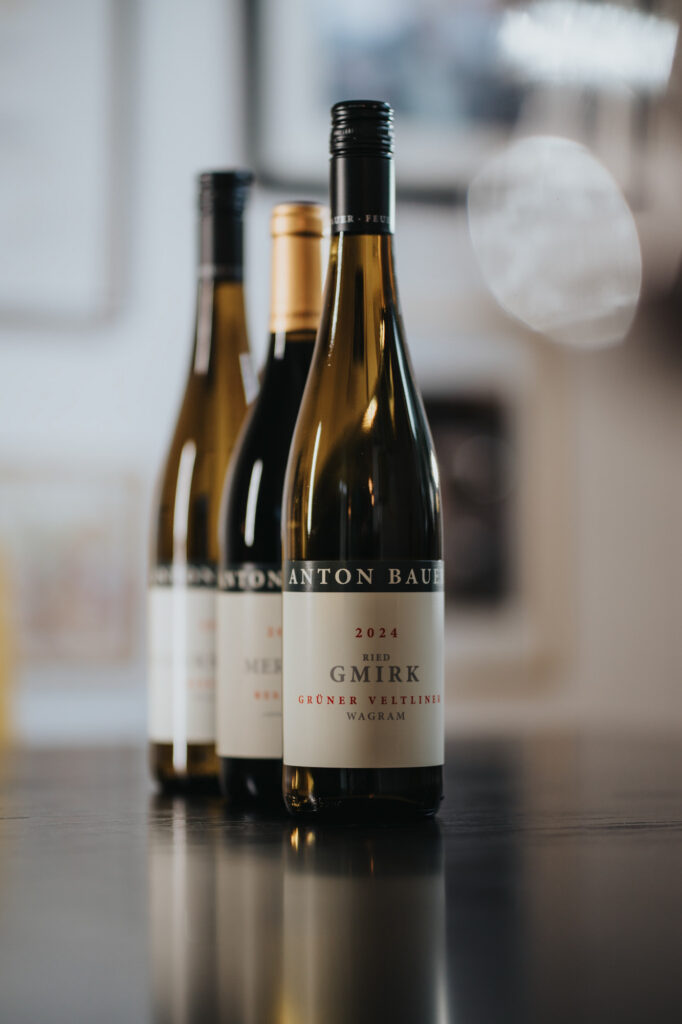
The Gösinger Gmirk vineyard is located between the cellar lanes of Feuersbrunn and Fels and is a south-facing site at the foot of the Hengstberg. The deep loess soils form one of the classic Gösinger Grüner Veltliner sites. We also cultivate our Pinot Noir here with finesse and a moderate degree of ripeness. The vineyards are flatter and somewhat cooler due to the less intense sunlight. At the same time, the site is relatively exposed to the wind, which is an advantage especially for Pinot Noir, as the grapes always dry quickly and no rot occurs. The wines bring more minerality and also noticeably more acidity – resulting in a peppery Grüner Veltliner and our Pinot Noir, where finesse and spicy aromatics take center stage rather than pure power.

The vineyards of the Stiegl site lie on the middle slope toward the Hengstberg ridge, in the area between about 220 and 290 meters above sea level. The terraced vineyards are primarily south- and also southeast-facing. The soil is a calcareous chernozem made of loess. Loess is calcareous rock dust (silt) that was blown here from the Alpine region with the bare forelands of the glaciers and river plains during the vegetation-poor cold phases of the Ice Age and now forms a loamy-sandy, always calcareous, and well-storing soil with a balanced chemical and mineralogical composition. Vineyards were already registered here in both the Franciscan Cadastre (1823) and the Administrative Map (1864-1881), which also bore the name Stiegel at that time.
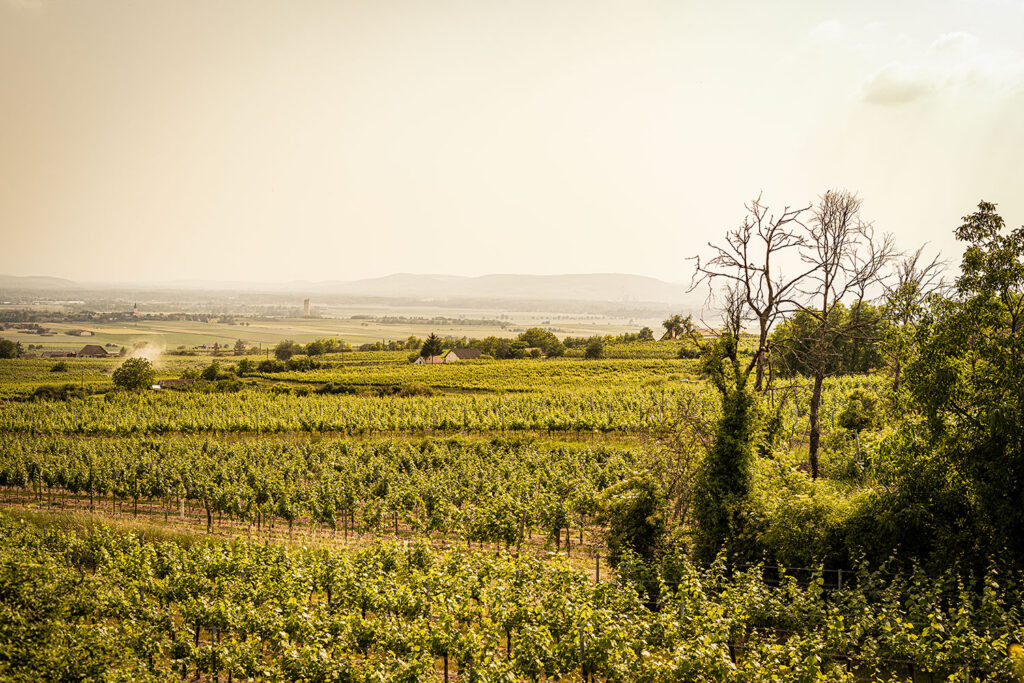
The Ortsriede holds a special position in Feuersbrunn, as it is located south of the village on the last terrain step from the Wagram to the Tullnerfeld. The soils also differ significantly from those of the Feuersbrunn hills: in addition to loess, clay, and primary rock materials in the topsoil, deep Danube gravel dominates here, giving Grüner Veltliner, Syrah, and Riesling a particularly mineral note. Due to the low humus content, the Ortsriede is one of the most difficult sites for us; on the other hand, the gravelly-mineral soils in combination with the fresh westerly winds from the Wachau produce particularly exciting and long-lived wines. There is very little water here, so yields are low, but the grapes are particularly aromatic and fragrant. Minerality and strong acidity characterize our finely structured, spicy Riesling.
You can find the wines from our vineyards in the online shop: Grüner Veltliner Ried Rosenberg · Ried Spiegel · all white wines
Wine craftsmanship
from the Wagram
From the harvest
to the character wine
Hand-harvesting & quality
With care and precision
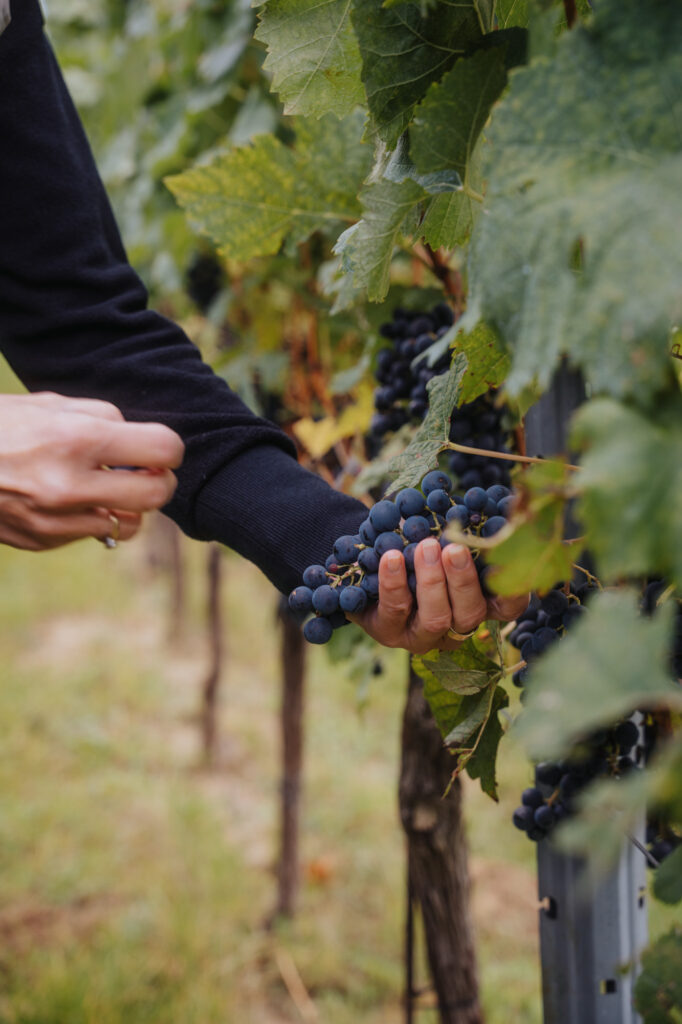
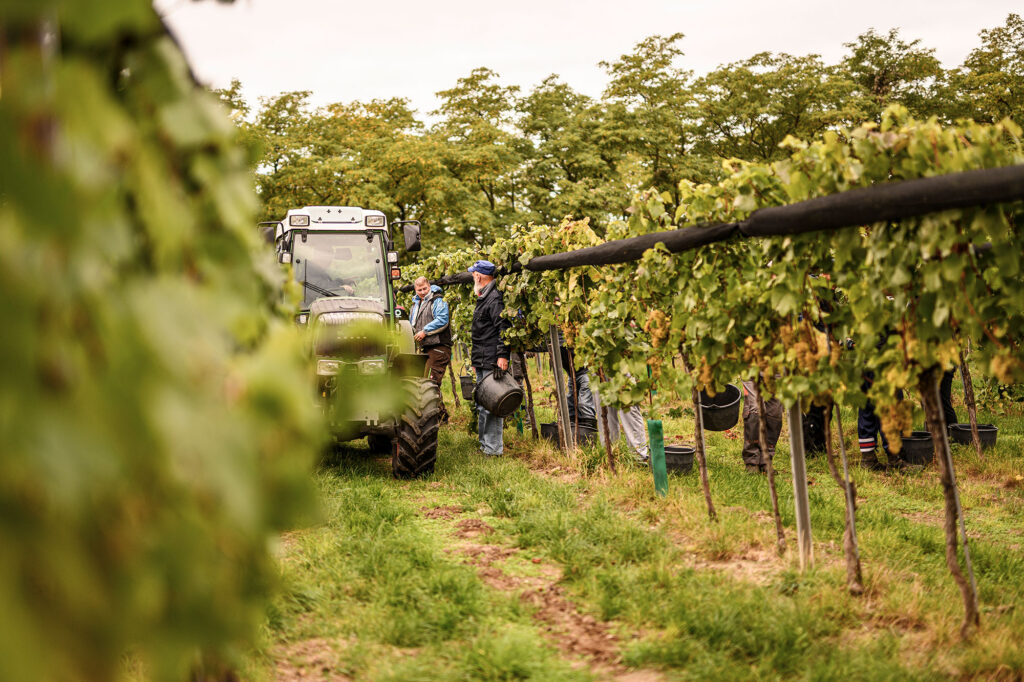
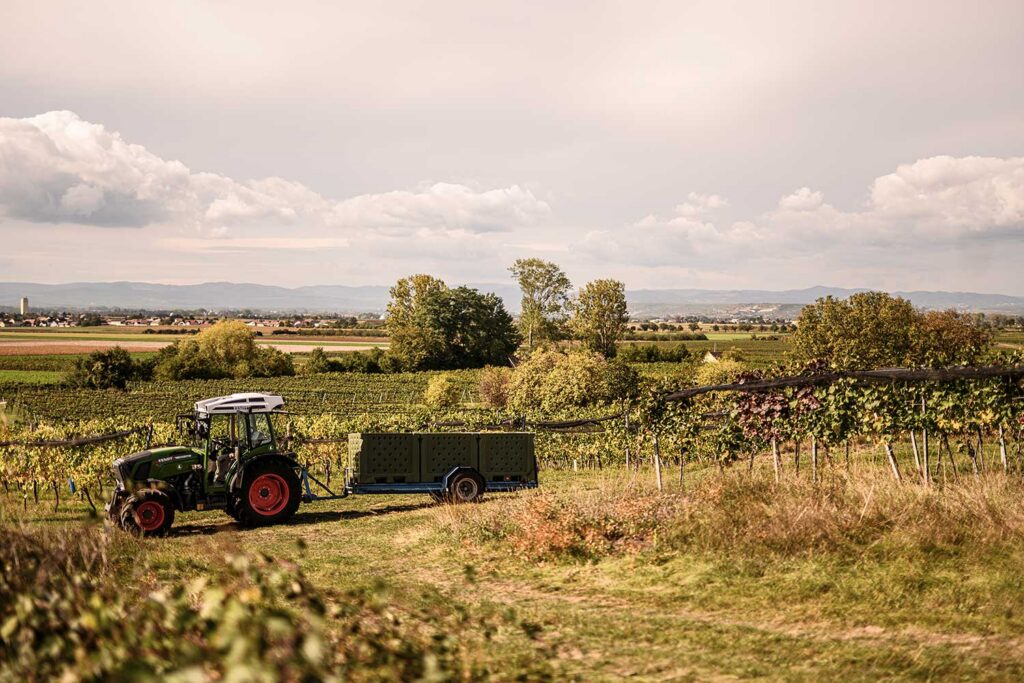
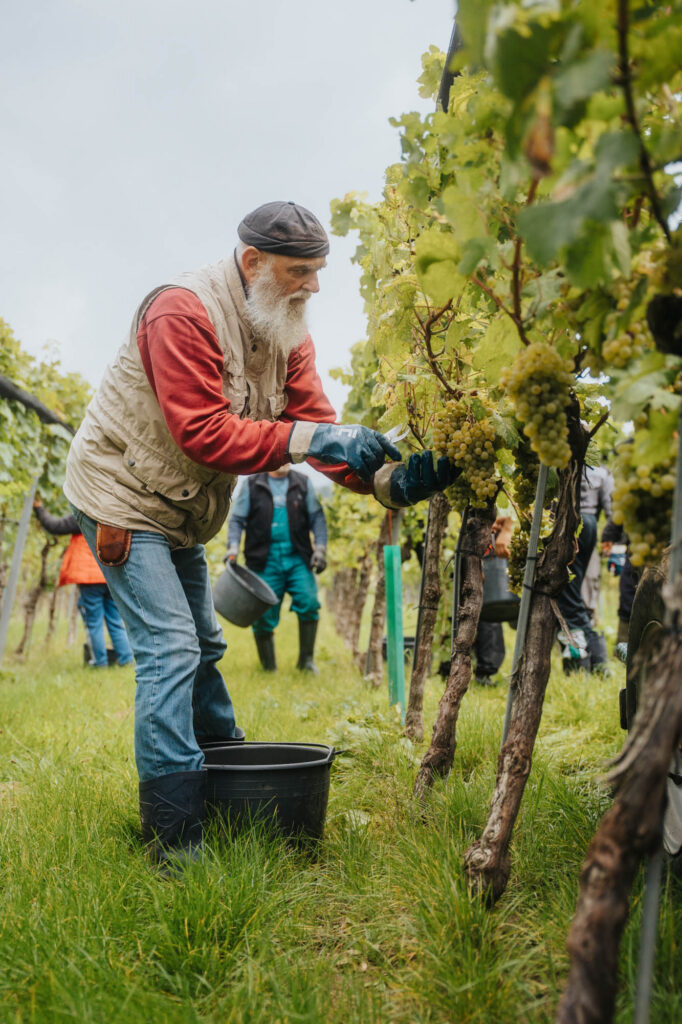
Quality begins in the vineyard. Every grape is harvested by hand, carefully selected, and treated with the greatest attention. Hand-harvesting is more than tradition – it is a crucial step in bringing only the best grapes into the cellar. Careful canopy management, a mindful approach to nature, and a sense for the right harvest time shape the path of every vintage from the very beginning.
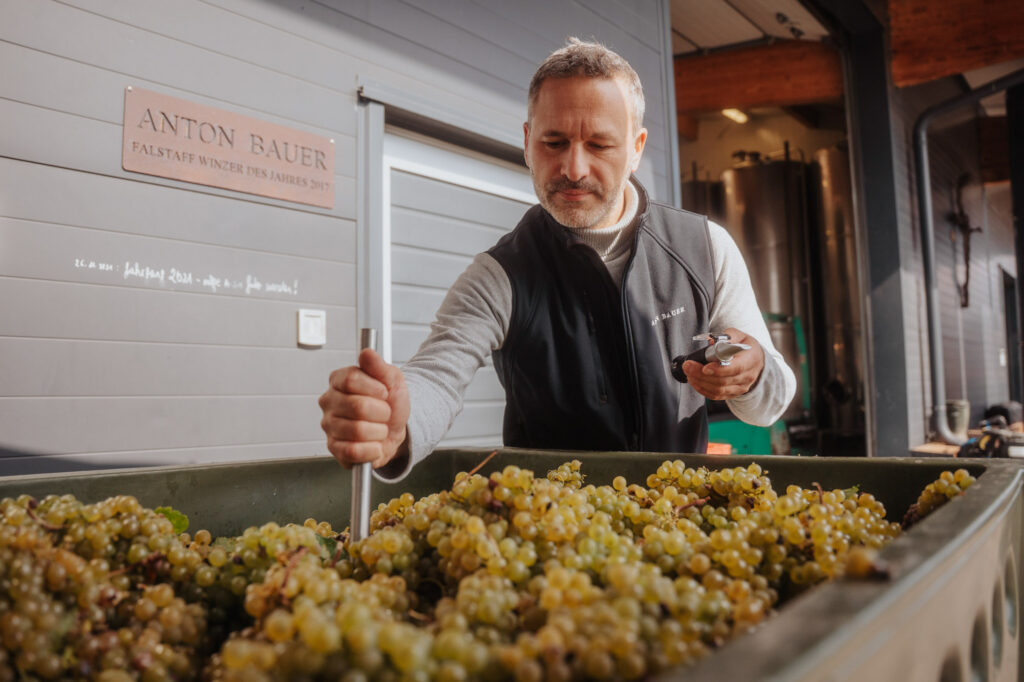
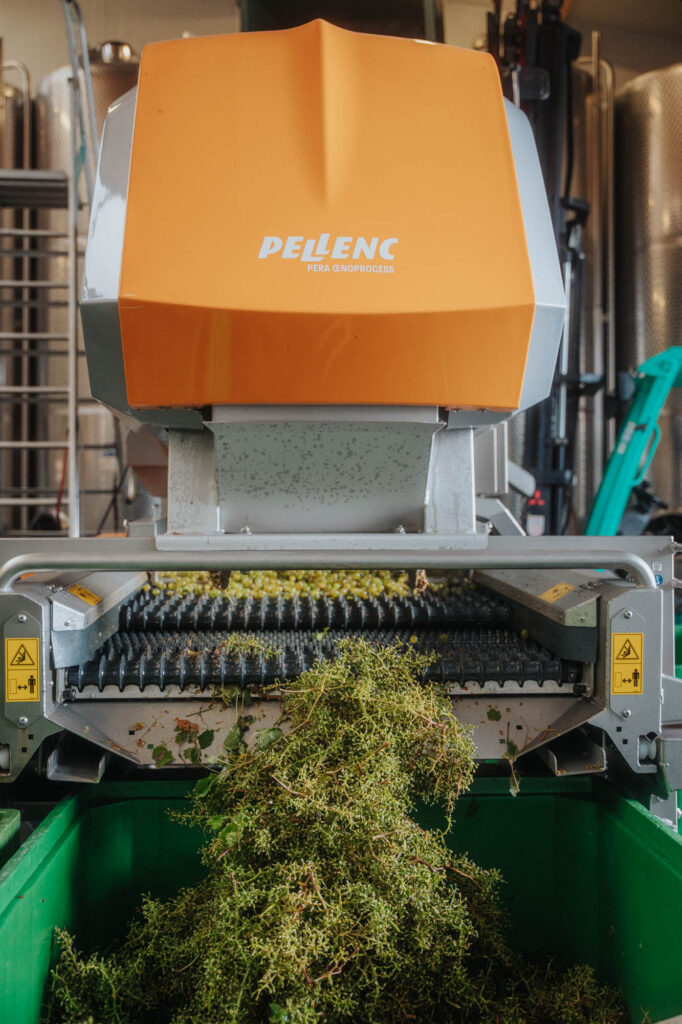
The same philosophy is followed in the cellar: gentle processing, plenty of time, and respect for nature make it possible to make the origin and terroir felt in every wine. The result is wines with finesse, clarity, and structure – precise, expressive, and unmistakable.
Every sip tells the story of the soils, the hours of sunshine, and the careful manual work that makes our wines what they are: